
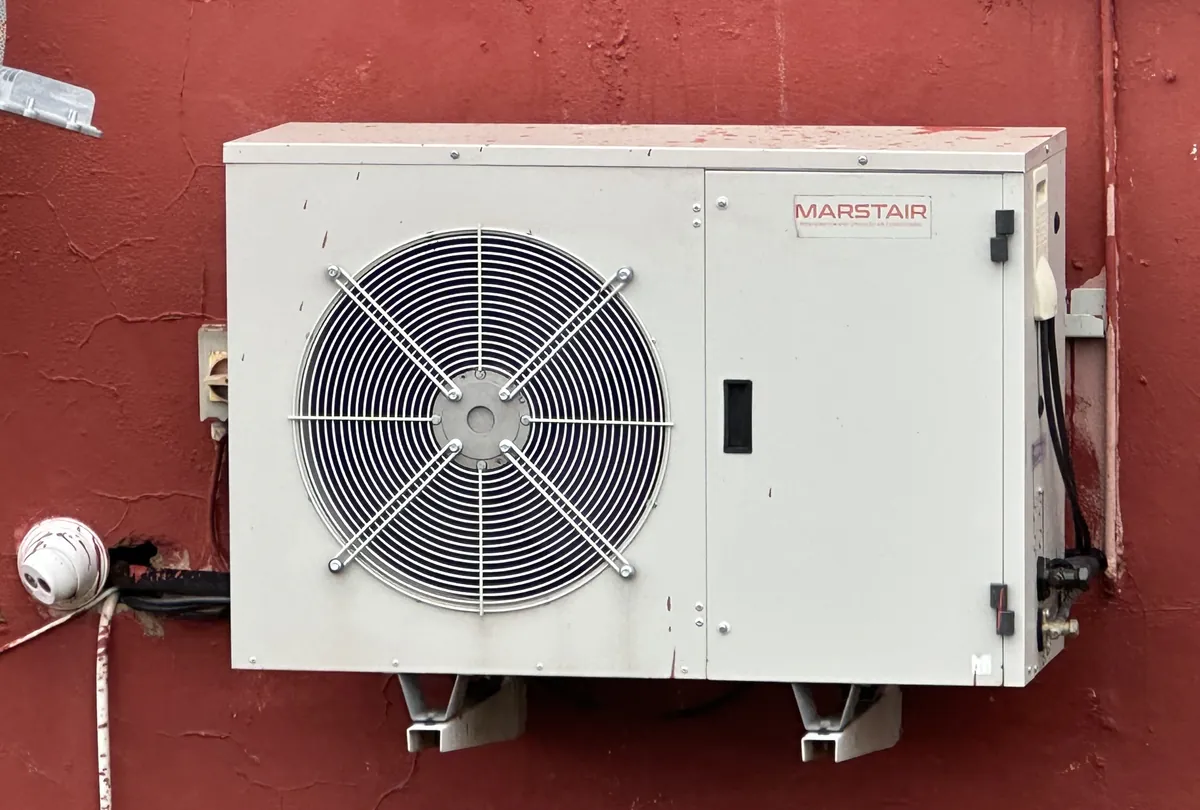
In La Mata and Guardamar del Segura, and generally in any property close to the sea, an air conditioning outdoor unit ages faster than one further inland. The culprit is salt air: fine salt particles carried by the sea breeze that settle on the unit's aluminium fins and speed up oxidation. Here's why it happens and how to minimise it.
Why salt attacks the unit so much
The outdoor unit of an air conditioner has a heat exchanger made of very thin aluminium fins. Their job is to maximise the surface area in contact with air to dissipate heat — but that same exposed surface is also the most vulnerable to corrosion. Salt air, combined with the humidity typical of coastal areas, creates a galvanic oxidation process that attacks aluminium faster than other materials, especially in basic-range units with no protective coating.
The most common signs of advanced corrosion are a gradual drop in cooling performance (the unit takes longer to cool), new noise from the outdoor unit, whitish or greenish staining on the fins, and in the worst cases, gas leaks from a perforated heat exchanger.
What actually protects a coastal unit
- Anti-corrosion fin coating: many manufacturers offer units with a specific treatment (hydrophilic coatings or protective resins) on the aluminium fins, designed for coastal installations. This is the single biggest technical difference between a basic range and a "coastal" or "marine" range.
- Stainless or galvanised fixings and casing: reduces corrosion on the structural parts of the outdoor unit, not just the heat exchanger.
- Outdoor unit placement: keeping it as far as reasonably possible from the direct line of the sea breeze, and avoiding spots where water or salt can pool, reduces wear — though front-line properties will always have some exposure.
- Regular cleaning: rinsing the fins with fresh water (no abrasive products) on a regular basis removes much of the accumulated salt before it corrodes in depth.
How often should a coastal unit be checked?
For front-line or second-line properties in La Mata, Guardamar del Segura or similar coastal areas, we recommend a strict annual service that includes specific anti-corrosion cleaning of the outdoor unit, in addition to the usual filter and drain maintenance. For properties right on the beachfront or exposed to constant wind, some owners opt for a check every six months. See the full details of our service in preventive maintenance and cleaning.
Common mistakes that speed up corrosion
- Positioning the outdoor unit too close to the ground or next to an automatically-irrigated flowerbed: the constant moisture from the sprinklers, combined with salt air, corrodes far faster than sea breeze alone.
- Cleaning the fins with a pressure washer set too high: this can bend them and reduce the exchange surface, and can also strip away any anti-corrosion coating the unit came with.
- Going years without any service because the unit "seems to be running fine": corrosion progresses inside the heat exchanger before it shows up in performance, so by the time you notice, it's usually already advanced.
- Keeping the outdoor unit under a sealed cover all year round: rather than protecting it, this can trap moisture against the casing and make things worse — covers should only be used during specific works, never permanently.
What we recommend when installing near the coast
When we install in towns close to the sea, we favour units with reinforced anti-corrosion protection over basic-range models with no coating, even though the upfront cost is slightly higher — the price difference is more than offset by avoiding an early outdoor-unit replacement. During the technical visit we explain which range makes sense given how close your property is to the sea.
If your property is a second home
If your home is near the sea and you only occupy it part of the year, corrosion keeps progressing whether the unit is running or not — and a unit left completely unchecked for a year or more is far more likely to need a repair the moment you switch it back on. We cover this in more detail in our guide on air conditioning for second homes in Cabo Roig and Punta Prima, with recommendations for protecting the unit while the property is closed up.